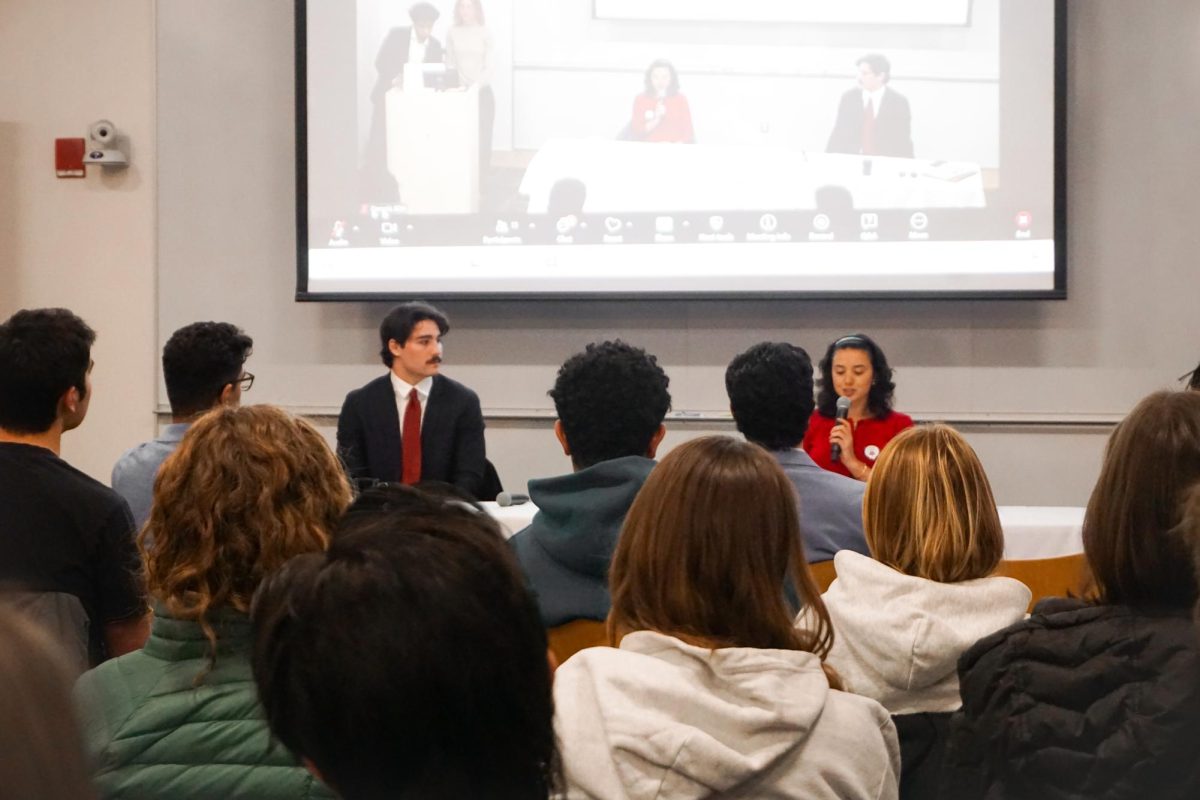
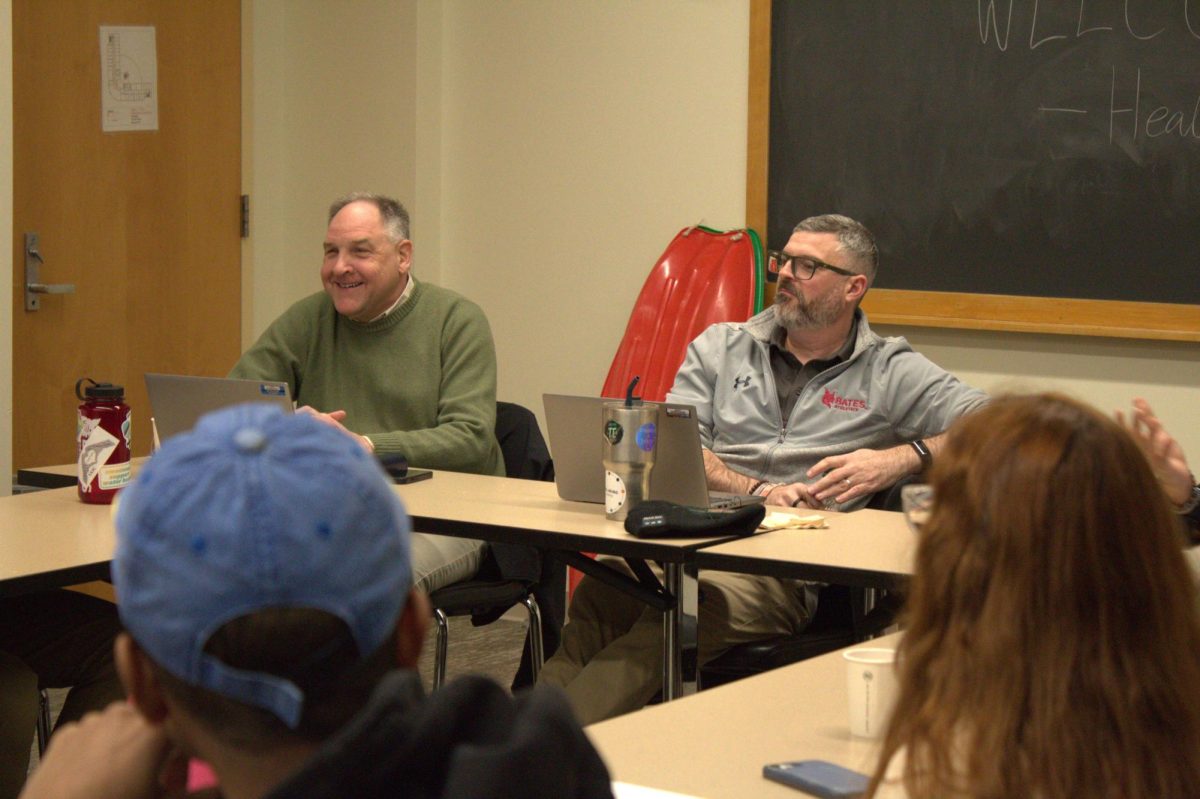
On Thursday, Feb. 5, the Gender Equity and Community Outreach club (GENCO) hosted a “Healthy Masculinities Panel” in Pettengill Hall.
Dylan Patel ‘27 hosted, while Professor Michael Rocque, associate professor of sociology and dean of the faculty, and Raymond Clothier, interim multifaith chaplain, served as panelists.
The panel’s goal was to examine masculinity, asking what healthy masculinity means and how it could manifest in habits, routines and conversations. GENCO provided guests with canvases and markers, a regular component of their bi-weekly meetings, for art, notes and doodles.
Patel moderated the event, asking a series of prepared questions exploring panelists’ perspectives on masculinity, including toxic masculinity, healthy masculinity as a concept and in practice, and connections between healthy masculinity and spirituality.
When panelists were asked about positive role models, Rocque said, “When I think of the most masculine man in the world, I don’t think of He-Man, I think of Mr. Rogers.” He shared that masculine strength goes deeper than physical brawn, and that to him healthy masculinity manifests with attributes of bravery, sensitivity and conviction.
The conversation delved into how to model masculinity to young people. As the panelists were defining what “masculinity” means as a word and a concept, Clothier brought up the idea that gender is a social construct. In response, Rocque asserted that gender, though a construct, is very real socially and personally. “…it’s visceral.” Masculinity may be viewed as both a construct and a lived experience, but an acknowledgement of these simultaneous truths is what can potentially create a greater understanding of one’s own relationship to masculinity.
Moving to how people create or develop practices of healthy masculinity, Patel asked “What do you think are the keys to healthy masculinity?”
Clothier answered that “the keys [to healthy masculinity] are not so different from being in healthy relationships in general.” He emphasized how connection with other people builds empathy and understanding, which in turn develops the practice of healthy masculinity.
A staff member of the Bates Counseling and Psychological Services (CAPS) staff, Brandon Ouellette, agreed with Clother’s point that empathy, understanding, and connecting with others is crucial for learning how to practice healthy masculinity. He commented that talk-therapy is a useful tool in understanding toxic masculinity and working towards creating healthy masculinity. He also encouraged people to come and make an appointment with CAPS, and emphasized how it was a space for everyone.
Student Cathy Shi ‘28, asked the panelists about the concept of “performative masculinity” and if they believed that it was limiting to criticize men for this form of masculine expression. Clothier commented that he “loved quarter-zips and matcha,” and Rocque shared that men and masculine-identifying individuals should be given the space to experiment and make mistakes as they find their own expressions of masculinity.
As the event concluded, GENCO Secretary Jamie Shelton ‘27 (an assistant news editor for The Student), encouraged students to attend future meetings for a more casual style of conversation, and invited participants to discuss gender across feminist, queer, and intersectional contexts. Further information on upcoming GENCO meetings and events can be found on Bates Engage.