
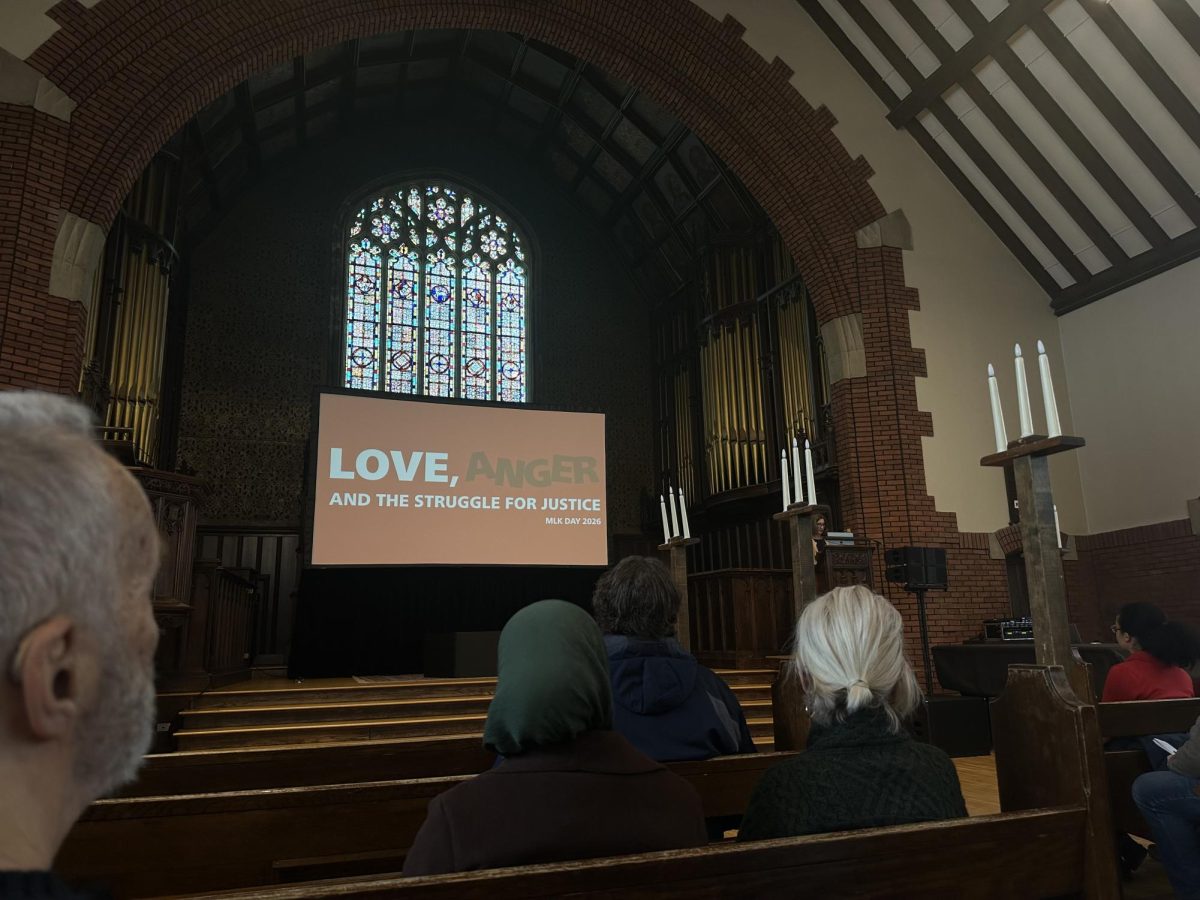
On Martin Luther King Jr. Day, students, faculty, Lewistonians and activists from across the nation gathered together in the historic Gomes Chapel to hear the Rev. Dr. Martin Luther King Jr. Day Keynote — an annual address that ranks among the most popular events in the college’s Martin Luther King Jr. Day Observance programming.
This year’s keynote “What Do We Do With All This Fear?” was given by Myisha Cherry, an associate professor of philosophy at the University of California, Riverside.
The author of The Case for Rage and Failures of Forgiveness, Cherry studies how understanding emotions can help people harness their power, according to her personal website.
Much of Cherry’s work has centered on anger and love — a focus that inspired this year’s MLK day theme “Love, Anger and the Struggle for Justice.”
Cherry’s keynote speech at Bates was about another powerful emotion — fear — and Martin Luther King Jr.’s belief that this feeling could be a potent force for good.
“2026… is a time [of] fear.. for a lot of us… In the last few months, I have had to reckon with this sense of fear that I feel, and turning to King has been illuminating,” said Cherry during her keynote address. “I’ve learned that fear doesn’t mean that we are weak. It doesn’t mean that we’re giving people the upper hand. It means that we’re sensitive to injustice. It means that we value the people that we are fearful for, and that we value the principles that we are scared that we’re going to lose.”
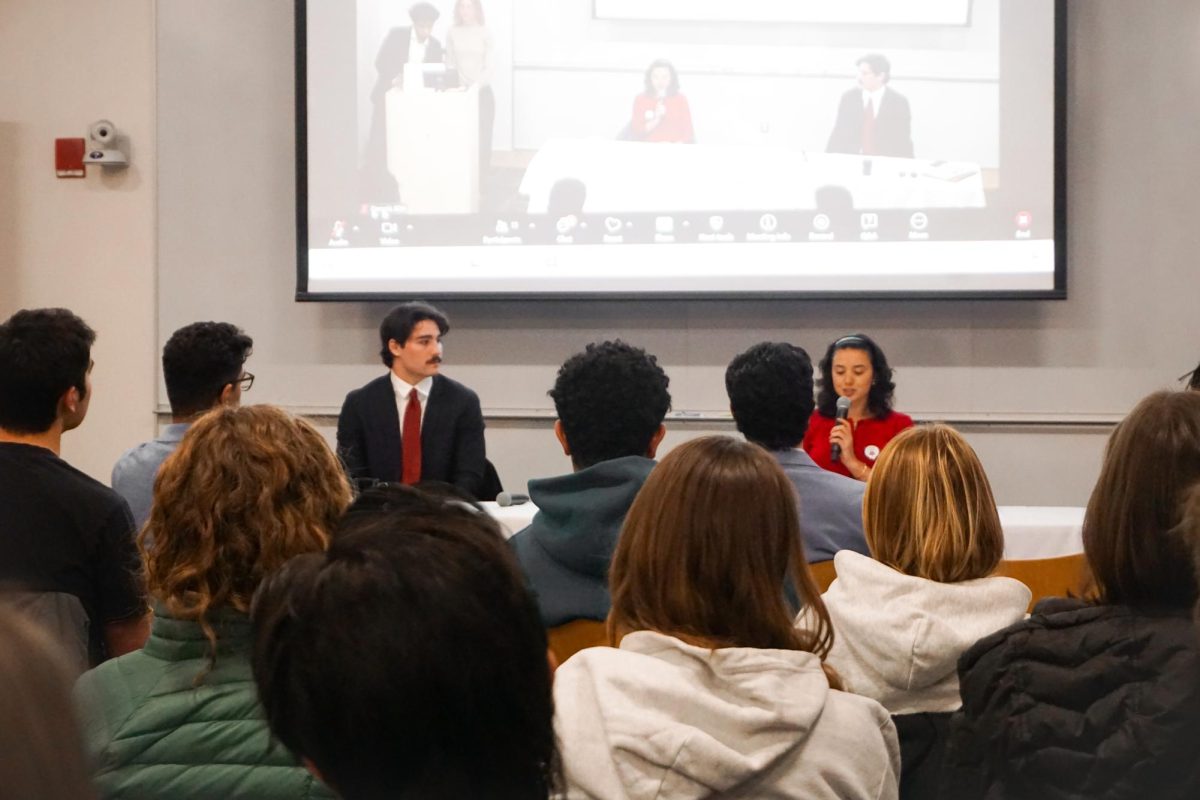
The event began with remarks by Angelica Paniagua ‘28, a student representative on the Martin Luther Jr. King Day Planning Committee. She was followed by Bates College President Garry Jenkins and Susan Stark, associate professor of philosophy and chair of the committee. After Cherry’s talk, there was a brief Q&A session.
Kicking off the keynote, Paniagua ‘28 discussed how the emotions of anger and love motivated the Bates’ faculty — in 1991 — to cancel classes on MLK Day and dedicate the day to speeches, lectures and workshops on race and justice after the outbreak of the First Persian Gulf War.
“We hope that today you learn, question and think of what roles love and anger should play in your life and how you deal with the endlessly changing world you are a part of — one that continues struggling to find justice,” she said.
In her own speech, Cherry explained how King separated fear into two distinct categories: abnormal and normal. While abnormal fear is harmful, he saw normal fear as a force that could motivate people to fight for justice.
Fear, she said, “alerts us to danger,” but it can also be “a creative force.”
Quoting King, she noted that “every great invention and intellectual advance” such as a medical breakthrough is spurred on by fear and the desire to escape a life dominated by terror.
In this way, Cherry said, King believed fear was a catalyst for social progress and change — making it not a weakness, but something “necessary.”
Cherry connected King’s theoretical understanding of fear to the Montgomery Bus Boycott and described how African Americans channeled their real fears of racist violence into collective action.
“[African Americans] were fearful every time they got on a bus,” Cherry said, “but instead of letting that fear stop them, they asked, ‘What can we do?’ So, they organized and decided to boycott buses.”
Highlighting an often-forgotten part of the boycott’s history, Cherry described the violent white supremacist backlash that erupted almost immediately after the movement began.
“That night the KKK rolled around neighborhoods in Montgomery, ” said Cherry. “A shotgun was fired into MLK’s home… white men beat a 15 year old black girl on the street. Snipers fired at city busses.”
In the face of such terror, Cherry explained that African Americans reacting to their fear with courage and came together to combat injustice.
They created the Southern Christian Leadership Conference and organized marches in cities such as Selma “to dramatize the moral issue and arouse the federal government to come and to make sure that black folks could vote in the South,” she said.
Explaining why the committee chose Cherry to be this year’s keynote speaker, Stark — in an interview with The Student — cited Cherry’s strength as a scholar and her dedication to making philosophy accessible through public dialogue. Beyond her academic work, Cherry, for example, is an avid public speaker, longtime host of the UnMute podcast, a contributor to major newspapers such as The Los Angeles Times and an active presence on her Instagram @myishacherry.
The decision was also personal.
“Her work has been very influential in my own research and I’ve also taught a lot of her work,” said Stark, explaining one of the reasons she suggested Cherry to the rest of the committee.
Cherry was also chosen because her philosophy addresses the difficult emotions and ethical questions that many Americans are wrestling with today.
Since Cherry is one of the leading academic authorities on how to use our rage for good, Stark shared that the committee felt her scholarship “really fit the moment we’re living in.”
“A lot of people feel angry about what is going on in the United States right now,” explained Stark. “In addition to feeling anger, people also, like King recognized [during the Civil Rights Movement], [understand] that hate is not going to be a winning strategy… We can’t just rest content with our anger… We need love too.”
Students who listened to the keynote were also carrying the weight of recent events and political developments that have troubled the country.
“Learning how to use fear as a motivator feels really important right now,” Elizabeth Holcombe ‘26 shared with The Student shortly after the address concluded “I know today is focused on anger and love in conjunction and I think we all are feeling love, anger and fear for others who are persecuted.”
Cherry urged the audience to transform that fear into action.
“King reminds me, and I hope he reminds you, that as we continue to face this trying year… we should use… fear to be courageous,” she said. “As long as we have confidence that we are fighting for noble ends… that we have justice and the universe on our side… [that] we’re unified… as long as we continue to embody these things, we can… reach the mountaintop.”
Additional reporting by Aden Michael ‘28.