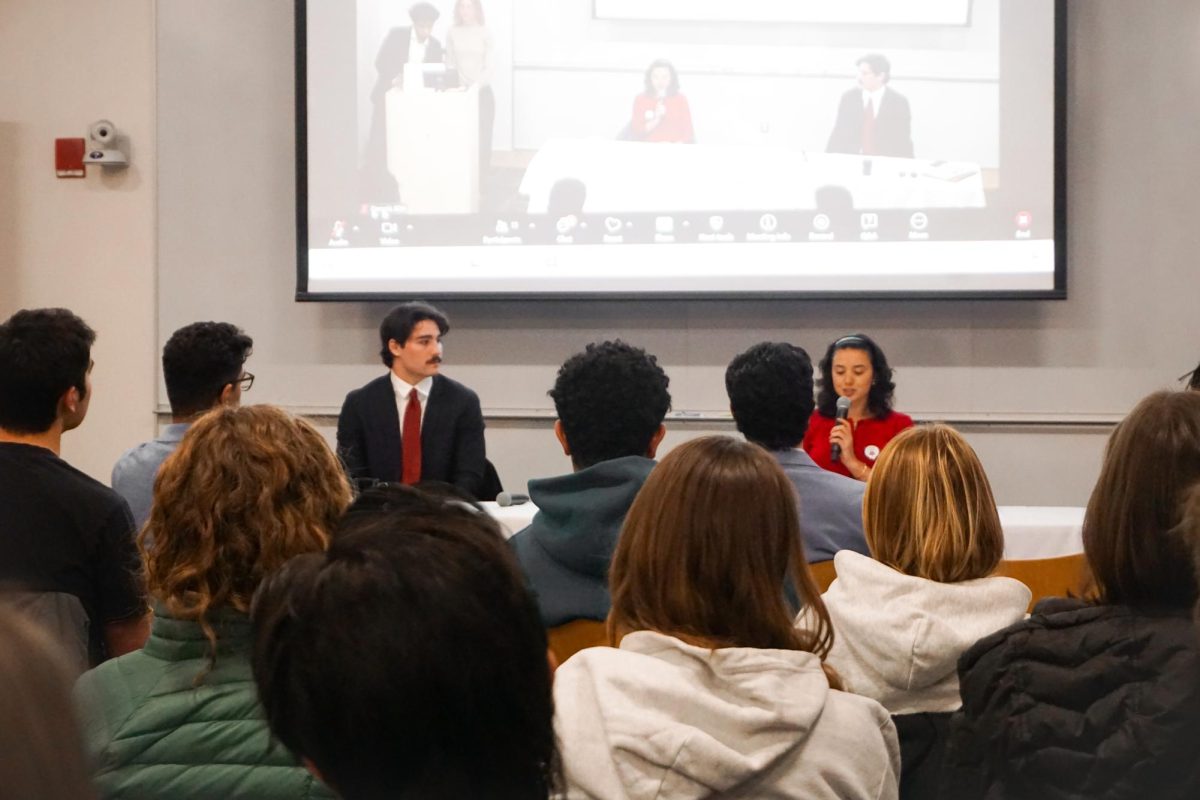
This fall, the Division of Student Affairs held several information sessions to review the new misconduct resolution process with students. Sessions were offered between Aug. 25 and Nov. 13, including 2 open sessions and 15 sessions for student leaders across campus.
Faculty passed the complete revision to the misconduct resolution process on March 3, though the Student Affairs team has been working on the policy since 2020.
The misconduct resolution process addresses alleged violations of the Code of Student Conduct, wherein the “respondent,” or the student who allegedly engaged in prohibited behavior, and the Office of Community Standards (part of the Student Affairs office) engage to address the situation.
In the information sessions to the student body, Assistant Dean of Community Standards and Deputy Title IX Coordinator Andee Bucciarelli shared that the revisions to the misconduct resolution process aimed to address a lack of clarity and outdated practices, including carceral language and a live hearing modeled off court proceedings.
The biggest change was the adaptation of seven resolution pathways into three. The seven previous options included judicial officer review, conflict resolution, sanctioning conference, voluntary resolution by withdrawal, voluntary resolution by agreement, student judicial board or a formal hearing.
Last spring, the implementation revision to the misconduct resolution process came to a contentious vote. While the move toward restorative justice was generally well-received, many Bates community members expressed concern that removing a live hearing would erase student voices from the process.
These discussions drew on the widely discussed incident in the spring of 2024 that highlighted the use of Student Conduct Committee hearings (SCC), wherein a Black student ended up facing four years of probation and a weapons charge for using a Nerf gun with friends. The use of a live hearing was considered an important way for the student to share his side of the story, eventually unanimously winning his hearing and receiving apologies regarding his treatment during the process. This was one of two student hearings that have occurred in the last ten years.
The new misconduct resolution process has removed live hearings altogether. In a comment to The Student, Bucciarelli described the benefits of these revisions, “Although Community Standards processes have always ensured that students have avenues for sharing their perspective on the incident and can bring a trusted advisor along with them, the new changes have allowed us to center the student experience as we implement a new system.”
Other elements Bucciarelli highlighted included updates to best practices, including that “our new process has principles of trauma-informed care built into it that are meant to help all students navigate the system, and have supportive people assist them as needed.”
When asked about challenges implementing the changes, Bucciarelli said, “We haven’t seen substantial challenges,” describing that “we continue to see similar trends in cases, where the majority of incidents are considered minor cases of misconduct. We can treat these more like educational opportunities, understanding that making mistakes and learning and growing from them is an important part of being 18-22 years old, and an important part of the Bates mission of educating the whole person.”
While only time can tell how these changes affect the Bates community, students might want to take another look at the Code of Conduct and acquaint themselves with the new system.
Conduct Resolution Options: What You Need to Know
Students’ options for misconduct resolution are either a misconduct resolution meeting, a restorative practices resolution or a disciplinary process resolution. These are navigated by a Misconduct Resolution Coordinator (MRC). An MRC is a staff member of the Office of Community Standards who decides which of the pathways to offer based on the nature of the situation.
A misconduct resolution meeting is the primary pathway used to address minor instances of misconduct. In a one-on-one meeting between the respondent and MRC, the staff member will explain the process, share the information reported to them, ask the respondent about their perspective and discuss potential policy violations and sanctions.
Restorative practices resolution options is actually an umbrella category which contains three options: restorative resolution, voluntary agreement or voluntary withdrawal. These options provide alternatives to a full and formal disciplinary process.
In a restorative resolution, all parties agree to participate, negotiate the type of facilitated conversation they would find helpful, then participate in a mediation, restorative justice circle, or other type of conversation, after which all parties agree in writing that the resolution has taken place.
Voluntary resolutions can result in either voluntary agreement or voluntary withdrawal. In the case of a voluntary agreement, the respondent requests the MRC recommend a resolution, which is created, reviewed and finalized in consultation with all parties before the respondent agrees to sign. If the respondent doesn’t sign, other resolution methods are still options.
A student may also withdraw from the college instead of proceeding with the resolution process in a voluntary withdrawal. In this case, they would notify the MRC or Senior Associate Dean of Students and their transcript would have the note that they had a “Voluntary withdrawal with disciplinary charges pending.”
Disciplinary resolution is a comparatively extensive process to determine if the respondent violated policy, including many rounds of inquiry and review. Notably, this process is only used in major cases that could result in suspension or dismissal. Any students engaged in this process can ask a current Bates community member (whether student, faculty or staff) to serve as an advisor, who can provide support: accompanying them to meetings, ensuring the student clearly understands questions asked and that the student clearly communicates their account of events.
This process is initiated with a notification letter including a summary of allegations and information about the process. A trained investigator then conducts an investigation, creating a report. This includes interviewing parties and third parties, as well as potential expert sources, with follow-up interviews, provision of documents or other relevant evidence as appropriate. An in-person meeting with the investigator is the first of three built-in opportunities for the respondent to share their perspective.
A trained decision maker then reviews the report, meets with parties as relevant to answer additional questions, determines whether the respondent is found responsible for the alleged violations, and recommends sanctions based on the situation. The respondent also has an in-person meeting with the decision-maker, offering another opportunity for the respondent to share their perspective. A sanctioning panel, made of one student, one staff and one faculty member from the Student Conduct Board Pool, will then finalize the sanctions based on the recommendation and the provided reports. As part of this process, the respondent has their third built-in opportunity to share their perspective; the respondent submits an impact statement to the sanctioning committee.
Parties are provided with a notification of outcome, which summarizes the relevant information, including findings and the sanctions. After the opportunity to appeal the outcome, final sanctions go into place.
If a violation has been found to occur in the completion of these pathways, the respondent will likely then face disciplinary actions or sanctions.
These generally include educational sanctions, such as attending courses or support meetings on a topic of concern, written warnings or required actions. Required actions may include having to move dorms or to not have a car on campus. Each of these is meant to hold students accountable for their specific harm and to help students avoid similar violations in the future.
The most severe disciplinary actions are only applicable after a disciplinary process pathway. Those actions include: notice (formerly called “probation”) of more than one year, suspension or dismissal. Notice indicates that within a defined period of time (for example, one year), if the respondent is found to have committed a similar violation, a previously outlined suspension will be enacted.
Students are encouraged to reach out to Bucciarelli at [email protected] at the Office of Community Standards [email protected] with any questions.