As a fourth-year student with a chronic case of senioritis, I’ve developed a bad habit recently: Complaining about my honors history thesis.
Like a Batesie in desperate search of warmth during this frigid Maine winter, I savor finding any moment to whine about the thesis writing process — subjecting everyone from my advisor to my close friends and, most recently, my Bulgarian grandfather to a seemingly endless torrent of grievances. Typically, the victims of my bellyaching will respond with words of reassurance, comfort and even empathy. After all, writing a thesis is tedious and often frustrating work. Isn’t it?
When I told my grandfather — during a particularly difficult moment writing my first chapter — that I wished I didn’t have to write a thesis to graduate, he scolded me. In part, he was angry because he knew it was a lie. I am passionate about my thesis and have been doing archival research for it since the summer of my first year; but, he was also disappointed that I was poo-pooing an opportunity that was denied to him.
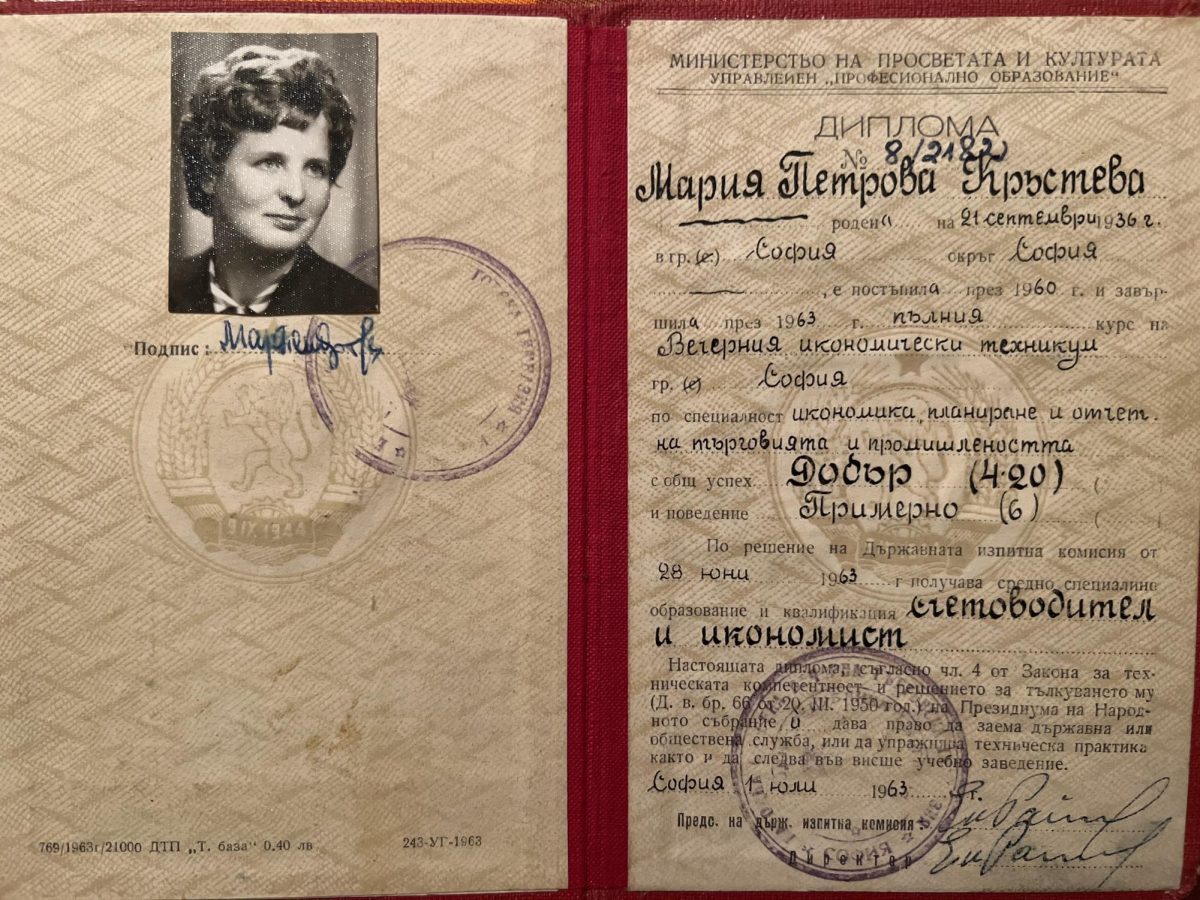
The son of a supposed “enemy of the people,” my grandfather and his siblings were prohibited from attending university in Communist Bulgaria. Although some Bulgarian university students did write theses, these students — especially outside of STEM fields — were often forced to regurgitate Marxist-Leninist dogma, toe the party line, and hide their own critical ideas behind coded rhetoric and double speak.
Preventing your ideological enemies or even your ordinary citizens from pursuing research opportunities is not a phenomenon unique to Communist Bulgaria. Instead, it is a hallmark of both emerging and established authoritarian regimes — from Nazi Germany to Trump’s America. Rather than simply requirements for graduation or vehicles for personal academic growth, theses have political dimensions, especially during times of acute sociopolitical crisis, polarization, and widespread turmoil. At their worst and most disengaged, they can be evidence of political passivity in the face of political violence, oppression and partisan cruelty. Or, theses can be a golden opportunity to practice “speaking truth to power,” — a powerful form of grassroots resistance popularized by the Czech dissident and playwright Vaclav Havel.
Although the concept of “speaking truth to power,” traces its roots to Quakerism and even Ancient Greece, I think that the iteration of this resistance tactic outlined in Havel’s 1978 essay “The Power of the Powerless” — which was circulated illegally in underground circles in Communist Czechoslovakia — offers a compelling model of what exactly “speaking truth to power” could look like in 2026 America. Famously, in his essay, Havel criticizes a grocery store worker who hangs up in his shop everyday a sign saying “Workers of the World, Unite!” — despite knowing that Czechoslovakia’s Communist Party did not actually live up to its Communist values and would not construct an equitable socialist paradise.
In general, Havel argued that the majority of Czechoslovakia’s citizens no longer believed (or, maybe never believed) in the promise of a workers’ utopia, but continued to feign support for the regime because it served their interests. If they failed to do this, these ordinary Czechoslovakian citizens were scared that they would suffer political repercussions such as being labeled “an enemy of the people”— like my great grandfather. By mindlessly parroting an unjust regime’s propaganda points and refusing to “live in truth,” however, these citizens and their passive acts of compliance — Havel argued — were vital to maintaining the lie that the Czechoslovakian Communist Party was neither corrupt nor an illegitimate vassal of Soviet imperialism. In a social system rooted in fiction and performative obedience, “speaking truth to power” — simply stating an obvious fact in the face of relentless lies — becomes a necessary component for dismantling oppressive regimes.
Luckily, authoritarianism in America has not progressed to the stage where we must all performatively don ‘Make America Great Again’ hats to avoid being cast out of academia’s ivory towers. Yet, there’s a disturbing trend of anti-intellectualism, self censorship and a willingness to buy into simplistic narrative and transparent lies that has permeated nearly every social group in America — including well-meaning progressive college students. Perhaps, the 2026 version of a sign that says “Workers of the World, Unite!” in the window of a poorly stocked grocery store in Communist Czechoslovakia is a social media comment that reads “it’s not that deep,” addressed to a peer whose only sin was daring to explore the moral complexities or political nuances of our past and present. Why confront the historical roots of injustice or the structural barriers hiding in plain sight when you can simply comment “it’s not that deep” and live like Havel’s greengrocer — aware that something is profoundly wrong in your country, yet too complacent or afraid to do even the bare minimum: to listen when others speak critically about it. Isn’t that the life — and the neighbor — everyone wants?
Obviously, a surge of social media users commenting “it’s not that deep” has not led to the downfall of intellectualism. Yet, it has occurred alongside—and maybe even because of– the Trump presidency’s assault on research, nuance, and the truth. Since taking office, Trump has waged war on higher education, science and even easily verifiable facts that are simply a Google search away. He and his Republican colleagues on the federal, state and local levels have stripped federal and state funding from researchers who use “woke language” or investigate “woke topics” — in other words, anything that opposes Trump’s dogmatic worldview. A large regional Slavic and Eastern European Studies Conference I applied to recently, for example, informed hopeful applicants that they would be rejected if their research had anything to do with “diversity, equity, and inclusion” due to a newly passed state law.
Trump and his Secretary of Health and Human Services Robert F. Kennedy Jr. have pedaled dangerous and baseless anti-vax conspiracy theories and eroded public trust in scientific research to such an extent that measles is set to lose its eradication status in the United States this year. This dangerous trend is due to an increasing number of parents refusing to listen to public health officials or read peer-reviewed scientific literature that points to an irrefutable fact: not vaccinating your children against measles leaves them vulnerable in the face of a disease that claimed countless lives before the creation of a vaccine in the 1960s. The decision to be anti-vax or anti-science is not only cruel, it is an act of political collaboration and collusion with an immoral regime that seems determined to destroy as many innocent lives as possible in pursuit of spreading mistrust and misinformation about our country’s scientific institutions and researchers.
For a man who has publicly expressed his admiration for ruthless dictators like Russian “President” Vladimir Putin and North Korean Dictator Kim Jong Un, Trump’s attack on researchers is unsurprising. It is a standard play in the strongman’s handbook. Just like Putin has butchered journalists and made it nearly impossible for free speech to exist in Russia, both the Nazis and Soviets murdered professors and lawyers in the European countries they conquered.
What is surprising, however, is how willingly a segment of the American public has drunk Trump’s Kool-aid and enthusiastically participates in upholding his latest lie — whether it be refuting the facts of a verified video showcasing ICE’s abuse of power or proliferating the myth that Bad Bunny is not an American citizen. This suggests that Trump’s hatred of intellectuals is not unique but is part of a larger trend that predates him and may even explain his political rise. Perhaps, it is because academic research has long been treated as the purview of a select chosen few — scholars and graduate students who are cloistered in ivory towers, insulated from ordinary life, and speak in a language inaccessible to most Americans. In Trump’s America, however, even this problematic truism has been turned on its head. As more and more graduate programs are stripped of funding, we can no longer depend on graduate students to “speak truth to power” — however meekly — by publishing the next pathbreaking but little read history book, scientific paper, or sociological report.
So, what are we to do? As undergraduates who are guaranteed the now increasingly rare and limited opportunity to work with world class professors and produce a substantial work of academic research, it is our duty to “speak truth to power” and take the moral responsibility of writing a thesis seriously. In a society that buys into propaganda more often than facts, we must write theses that either use empirical evidence or close reading to grasp at something substantial — whether it be something true or an insight into the human condition. STEM majors should write their theses knowing that the act of doing honest and substantial scientific research is a form of political resistance against a regime that routinely discredits their work and endorses the baseless claims of conspiracy theories. For those writing creative theses, it is imperative that you take inspiration from artists like Bad Bunny and produce the art that you want to make and that reflects your own values—not the dogma, aesthetic, and bigotry of the Trump regime, Turning Point USA, and Kid Rock.
Yet, taking up the banner and burden of continuing academia’s mission to further humanity’s knowledge is not enough. We must succeed where they have failed. The wonderful thing about being an undergraduate writing a thesis is that we have not fully entered the ivory tower of academia yet — and many of us will have careers and lives “in the real world.” This means that we have the freedom to write in an accessible style and to talk to our peers and the community about our thesis and the research process itself in a democratic and inviting way. Rather than complain about our theses, I think that we should talk about them positively and profusely — especially with the people in our lives and communities who have never been given the chance to write one.
For me, the work on my thesis is never more meaningful than when I can talk about it with my grandfather and listen to his own critical thoughts about it. In a way, I feel like I am giving him the chance to engage in the thesis writing experience that was denied to him. It is when we engage in these informal, intimate, and intellectually lively conversations about my work that I feel like together — my grandfather and I — are speaking truth to power. In those happy and revealing moments, we are engaged in the essential process of trying to grasp what is real in the tangled web of misinformation that was spun by Communist Bulgaria then and is being re-spun by the Trump regime now.