

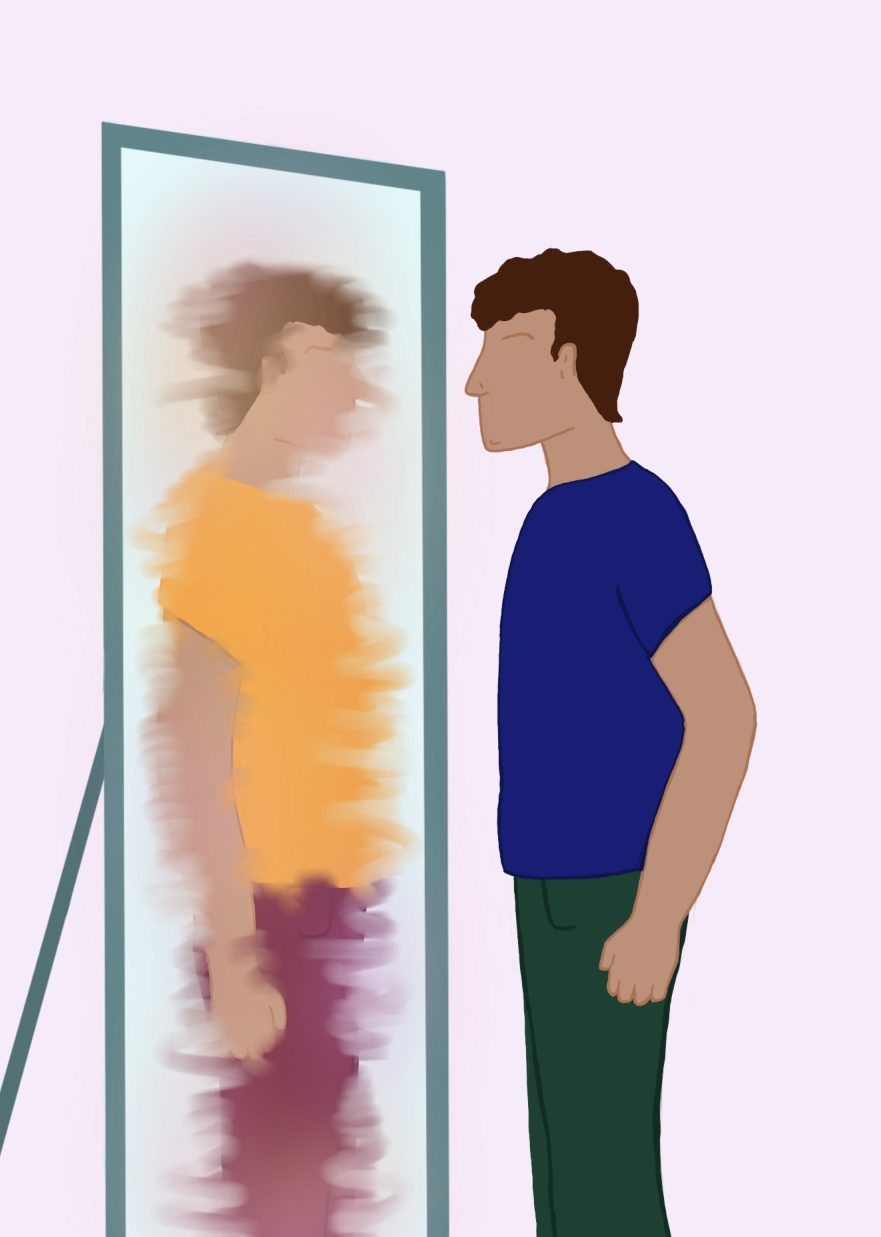
“Be yourself” is one of the first pieces of advice that most of us ever receive. It shows up everywhere: before talking to a crush, before an interview and before trying to find a sense of belonging. It is repeated so often that we rarely pause to consider what it actually asks of us.
Wanting to be ourselves is not the hard part. Most of us genuinely want that. The difficulty comes when we try to understand what “being myself” means in real time. How do we express something authentic while also recognizing that we do not exist in a vacuum? The truth we have to navigate is that we live among other people, and with that, our choices land somewhere.
The confusion about being oneself stems from the assumption underneath the advice— the idea that there is a singular, separate self inside us that we are meant to discover and perform consistently. The longer I have lived, the less that idea holds. The self is not sealed off; it is not static; it is not something we uncover once and then display forever.
The self, or who we are, is relational. It emerges through contact with environments, friends, strangers, experiences, and the world we move through. Everything we know about who we are comes from interaction. Our edges, our warmth, our blind spots, our strengths—all of it shows up in relationships.
This is why the shortcut “don’t care what other people think” has always felt unfinished. How other people engage with us is important. As humans, we learn to understand ourselves through others. Caring about someone’s perspective is crucial to our growth and development. The important people in our lives shape the type of person we want to become. We should care about how we impact others. The problem is not caring. The problem is guessing.
Authenticity falls apart when we try to predict how we will be perceived and shape ourselves around those predictions. In this process, guessing replaces awareness, and anticipation replaces intention. When our own will is lost, our actions begin reflecting imagined judgments rather than what we align with. The more other people’s voices cloud our thinking, the harder it becomes to hear our own desires.
The clearest moments of authenticity I have experienced, and the ones I see in others, come from moments when performance subsides. In these moments, we stop trying to fill space with who we think we should be. When performance drops, we stop constructing ourselves and, instead, participate in the environment we are actually in. When the pressure to be something loosens enough, the present moment becomes more compelling than the performance we think we must maintain.
So how do we stop performing? For me, it begins with listening. Listening to myself is never perfect, but certain parts of us really do deserve our attention. I have started to think of the more honest impulses in me as warm desires, the ones that grow out of sincerity, curiosity, or care. They are quieter than the desires rooted in fear or the need to be accepted. They do not ask for validation. They simply move toward whatever feels real. Trusting those impulses has taken time and is still something I am learning to do. When I honor them, even briefly, they return a little stronger and a little clearer. Over time, they begin to feel familiar, almost like an old friend arriving with a reminder I did not know I needed.
As those quieter impulses become easier to recognize, something else becomes clear. Authenticity is not a single moment of clarity or a feeling we can hold onto. It shows up in how we move through the world, especially in the small decisions that follow. Once performance softens and those warm desires have space to speak, we begin to see authenticity for what it actually is.
Authenticity is not the unveiling of some isolated truth. It is the alignment between the warm impulses that arise in connection with what surrounds us and the actions we choose to take. The self is a moving point of contact, always changing in response to both our inner world and the environment we inhabit. It is not a solid identity.
The truth that has landed for me is that authenticity is a verb. Who we are is never finished. We shift and reshape as our circumstances shift around us. We grow, we change and we evolve through our relationships with the people and environments that make up our world.
What we are able to control, and what remains constant throughout this movement, is our ability to give attention to the parts of ourselves that feel warm and sincere. When we focus on these quieter impulses instead of the versions of ourselves built from guessing or fear, our actions begin to reflect something real.
Authenticity is not a destination or a completed identity. It is a shared movement where we listen to the rhythm within us and the reality of the space we are entering. When we are truly ourselves, we do not perform. We participate. We respond. We move with what we know.






shalom israel sperber • Dec 2, 2025 at 1:45 PM
well written and thought provoking, i absolutely loved it!