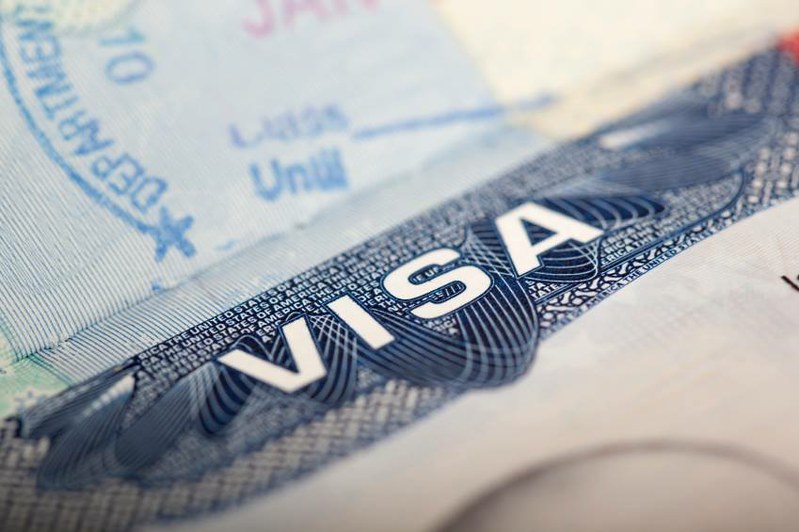
International students visas have been an established practice for the last 75 years of American undergraduate life. Bates “has sought and funded” exceptional international students since the 1920s. The Center for Global Education has an expansive role supporting our international life, ranging from helping students navigate during their first days on Bates campus to encouraging year-round opportunities. Recent concerns on college campuses across the country have led to increased messaging to the Bates international student listserv to help students understand the current situation as it relates to the Trump administration’s stance on immigration.
This article outlines important know-your-rights information and best practices for international students in this political climate. Other readers may find this article useful to stay informed on how our national legal climate impacts individuals and communities.
As a result of the Trump administration’s anti-immigrant rhetoric and policies, there has been widespread uncertainty about what this administration might mean for students. This tension heightened following the recent detainment of permanent U.S. resident and Columbia graduate student Mahmoud Khalil, and as college campuses across the country face federal financial threats for being “too liberal.” The universities Columbia, Harvard, Cornell and John Hopkins have all been threatened with the removal of federal grants over “illegal protests,” which is thought to imply pro-Palestine non-violent protests. These cases have raised international concerns about rights to free speech and the safety of international students on American college campuses.
Know Your Rights
The first step to protecting yourself is to know your rights. All people in the United States, regardless of citizenship status, have rights under the US Constitution and an assortment of other laws. The National Immigration Law Center highlights some of these rights such as: remaining silent, refusing to speak to immigration officers, refusing to open the door, and speaking with a lawyer before signing anything. They also recommend keeping in mind that “ICE and other law enforcement officers may think they can get away with violating your rights.”
The Center for Global Education is currently advising “a general set of ideas and suggestions” for U.S. Visa holders, as of Feb. 23, 2025, noting that “The law requires anyone who is not a U.S. citizen to carry evidence of status at all times.” Specifically, they write, non-citizens should carry their I-94 arrival-departure record, Form I-20, Green card, employment authorization documents, and an unexpired passport that will remain valid for at least 6 months. More information on universal rights in the U.S. can be found on the NILC or the American Civil Liberties Union website. For international students on an F-1 visa, these constitutional rights remain the same, though there are restrictions to residence and employment.
The NILC and the ACLU are both leading legal advocacy organizations dedicated to defending the rights of people across the country. They both share helpful resources on their websites, including a general know-your-rights fact sheet and guides to a variety of different scenarios. Additionally, you can find wallet-sized know-your-rights Red Cards, from the Immigrant Legal Resource Center, which list rights in the user’s language (of which there are 19 translated right now), with an official script in English on the flip side. The app “Know Your Rights 4 Immigrants” can also read your rights out loud and send a message to an emergency contact, among other resources, in 16 languages (available to download on Apple and Android).
As of Jan. 14, 2026, the Center continues to re-iterate this advice, also noting that “U.S. immigration authorities have broad authority to review your social media.” Regarding domestic trips within the U.S., they write, “Customs and Border Protection (CBP) officers may search laptops, cell phones, or other electronic devices,” highlighting that “potentially controversial content could raise concerns about your intentions and impact your visa status.”
Best Practices
As highlighted by the Center for Global Education, “If you are planning for domestic trips within the U.S., we expect there may be an increase in random immigration checks on domestic flights, as well as random checks on buses and cars along highways.” They also write:
“Having a copy of documents showing your legal immigration status could help avoid extensive questioning.” More information on travelling recommendations can be found on the Center for Global Education website.
“Carry printouts of your documents, as well as electronic copies. Ensure you make multiple copies of these documents and store them in different places—not all on your person or on a single device you are carrying, to reduce the risk of losing all documentation at once.”
While it is not a legal requirement for all citizens to carry ID or evidence of legal residence, some BIPOC citizens are doing so “just in case,” given recently increasing evidence and fear of racial profiling.
Police and immigration law enforcement have incredibly broad rights to question and check the immigration status of any individual. If immigration officers have “a reasonable suspicion, based on specific articulable facts” that a person being questioned is an illegal immigrant or acting against the U.S.A. they are allowed to “briefly detain the person for questioning,” according to the Cornell Law School Legal Information Institute. Furthermore, U.S. immigration enforcement has been well-documented as using racial profiling to increase arrests and criminalization.
However, it is notable that in non-public areas of a business or residence, immigration officers are not allowed to enter without the consent of the owner or a warrant. Many guidelines for dealing with ICE emphasize the importance of not letting officers into your residence, only talking to them through the door, and asking for proof of any warrant to be slid under the door or held up to a window. As Murad Awadeh, president of the New York Immigration Coalition, said to MSNBC, “Our best defense in this moment is people knowing their rights. Stay calm, don’t lie. Remain silent. Don’t consent to the search… Do not open the door without a judicial warrant, as well as making sure that it’s signed by a judge.”
As reported by WMTW on Jan. 14, 2026, Portland Major Mark Dion and Lewiston Mayors Carl Sheline both “reminded residents on Wednesday that the city police departments do not cooperate with ICE and do not enforce federal law.”
Regarding law enforcement at Bates, on March 12, 2025, the Director of Campus Safety Paul Menice sent out an email to faculty, staff and student listservs, writing that if any member of the Bates Community encounters “any government official on campus who is asking for information on or the location of a member of the Bates community” they should “direct them to Campus Safety immediately at 245 College Street, or 207-786-6254.”
This is because Bates protocol “requires that the official request the stated purpose of the visit so Campus Safety can contact the appropriate Bates employees to respond.”
In an email to Bates faculty, students, and staff on Jan. 16, 2026, Garry Jenkins and the Bates Senior Leadership team highlighted existing campus policies and updates in regards to “the potential for increased federal Immigration and Customs Enforcement (ICE) presence and activity in Maine.”
Their guidance for all interactions with law enforcement requests that students use language such as “It is campus policy that I direct you to Campus Safety, who will address your inquiry” to follow policy if approached by any law enforcement official on campus. They add, “In addition, any member of our campus community can call Campus Safety to inform them of the presence of uninvited law enforcement on our campus grounds. Our policies require Campus Safety to verify officers’ identities and verify that they have a valid judicial warrant.”
Additionally, the email provided updates regarding building access policy, noting that “Commons, Ladd Library, and Olin Arts Center will move to card access effective January 17.”
The email went on to mention safety considerations including on-campus protest guidelines, highlighting Bobcat Express services and detailing a number of support networks and resources.
Care-taking In Community
The facts of President Trump’s administration are still changing, and likely will continue to do so throughout his term. Given recent federal directives, the human rights of historically vulnerable communities are increasingly at risk, including migrant, BIPOC, LGBTQIA+, religious minority, low-income, and disabled communities. Read more about the human rights at risk in articles from Human Rights Watch and Amnesty International.
It is also important to be mindful of personal health, though; negative news can lead to detrimental mental and physical health. In an article published by the American Psychological Association, they recommended “taking some kind of action, perhaps donating to a cause, joining an aid group, or signing a petition” to help reduce this new-related stress. Other recommendations include activities that help maintain optimism, such as “social activities, spiritual practices, physical movement” or spending time with pets. By staying up-to-date and following best practices, the Bates community can learn how to take care of each other and show up for our neighbors.
Further Resources
- Bates Advice for Students with F-1 Visas
- ACLU: What to do if you are stopped by police, immigration agents, or the FBI
- Minimizing Digital Footprint & Doxxing Prevention (Bates Sign-in Required)
- Deportation Defense Manual
- ICE Not Welcome Guide: Verify, Document, and Report | ACLU of Southern California
- ICE Raids: Toolkit for Organizations
- National Immigration Law Center
- Catholic Charities Maine
- Legal Services—International Institute of New England
- Immigrant Legal Advocacy Project
Just in-case resources for legal help:
- Legal Advocacy Project Maine: et legal help webpage
- American Immigration Lawyers Association: database search, will get more hits for Portland or just ‘Maine’ as a whole
- Maine Bar Association: $35 for a referral to an immigration lawyer
Editor’s Note: This article was updated on Jan. 17, 2026 to include new and relevant information on immigration rights.




John Weiser • Apr 27, 2026 at 4:10 PM
This is a helpful guide that explains rights and best practices in immigration law. It feels very useful for many people.