

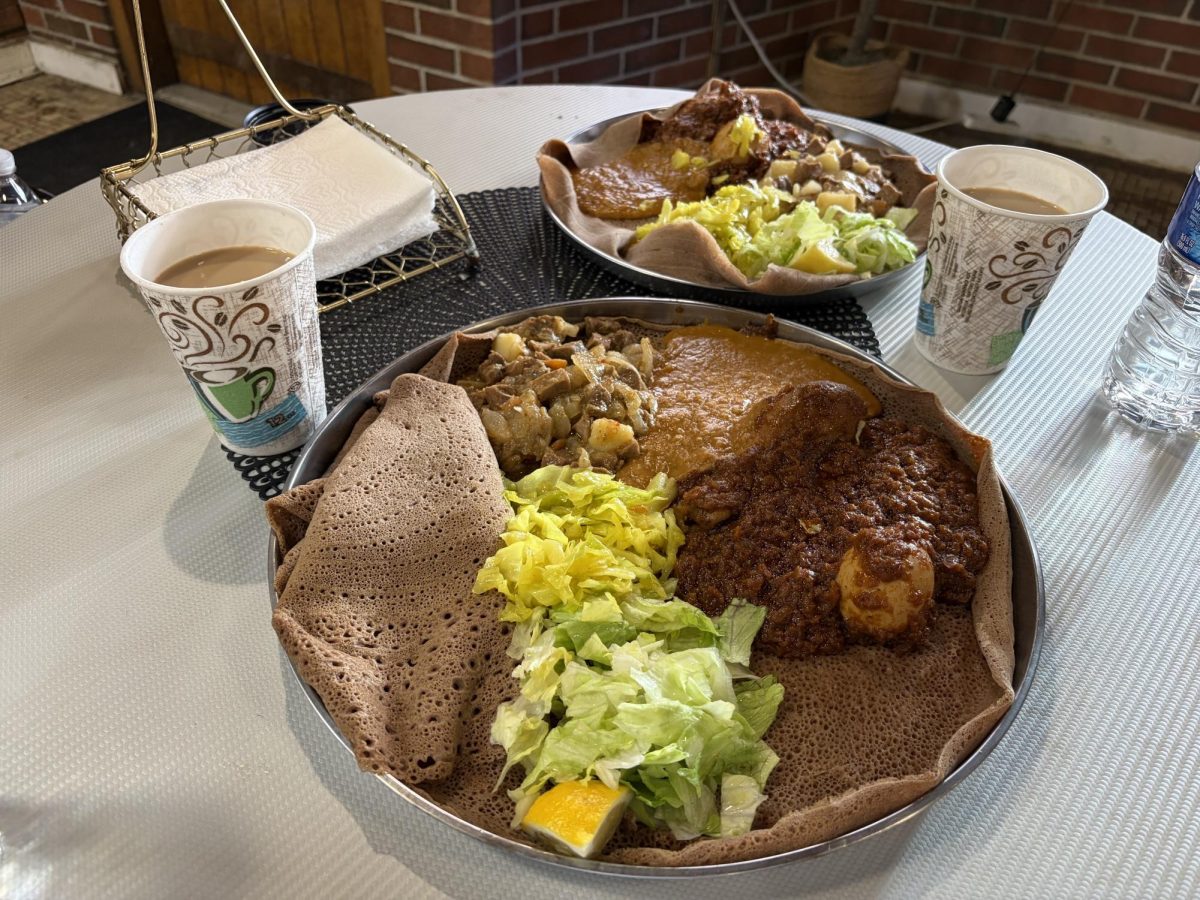
As soon as we walked into Naima Restaurant, we were greeted by a man who ushered us to a table and asked, “What can I get you, my friends?” Naima has no menu. Instead, you have to ask what they are serving, and each time we’ve gone, we’ve gotten something different. It feels like being a guest in someone’s home, where you are brought a home-cooked meal.
That feeling of being a guest extends to the family who owns the restaurant. Naima Restaurant is owned by a Somali family and opened in September 2023. Mukhtar Bashir, the owner, says, “Bates kids come sometimes, not often. Mostly other Somalis.” Bashir is a big fan of Bates and has had three of his sons attend the college, two of whom have already graduated.
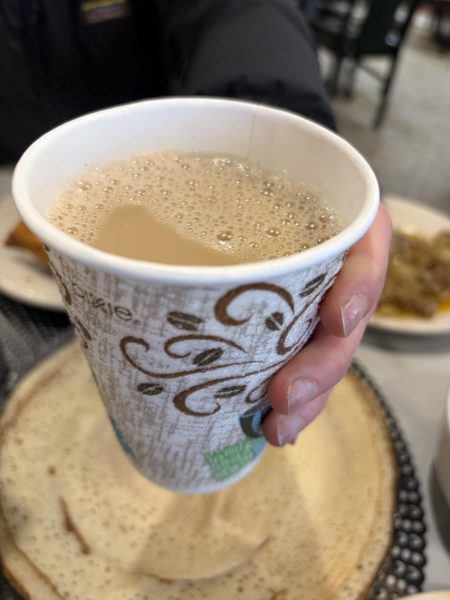
We ordered the Ethiopian injera, sambusa, and tea.
Injera is a large, spongy flatbread that acts as both a plate and a utensil. You rip off a piece and use it to scoop up the food. This was a highlight for us. The injera has an acidic, tangy taste, and when paired with the other dishes, it creates an amazing combination of texture and flavor. The platter included a creamy chicken stew with a drumstick whose meat melted off the bone, known as doro wat. There was also suqaar, a mixture of lamb, onions, and spices, as well as fuul, a bean-based sauce, pickled cabbage, and salad. Altogether, the dish offered an incredible range of flavors, textures, and aromas, making it a must-try.
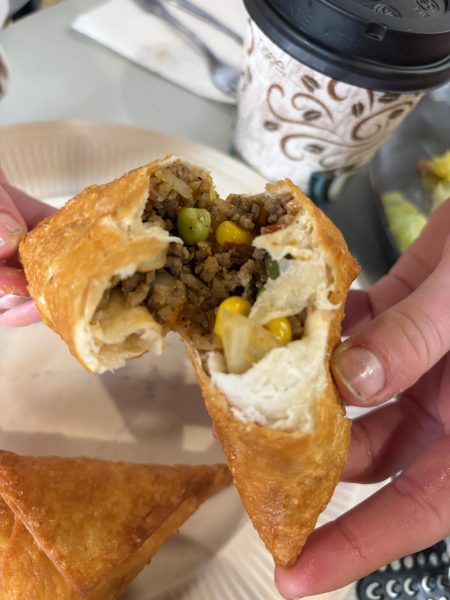
Sambusa is a pastry popular throughout much of east Africa. It is a fried, triangular piece of dough filled with ground beef, peas, lentils, and spices. Naima handmakes its sambusas daily, and they were excellent.
Somali black tea, also called shaah, is made with black tea and a blend of spices including cardamom, cinnamon, cloves, and ginger. Chai has become more popular in the United States in recent years, and this was truly some of the best chai I have had.
After our meal, we asked Bashir what his favorite dish was. He replied, “Somali rice is the best, my favorite. You can always eat it. You won’t ever get tired of it. It is very different from other African nations, as well as Indian biryani.” Somali rice is cooked with spices such as cinnamon, cumin, and coriander and includes sweet elements like caramelized onions and raisins, giving it a distinctive sweet and savory flavor.
However, the excellent food is not the only reason to visit Naima Restaurant. Authentic Somali cuisine is difficult to find in the United States, and only a few places serve it. Eating here allowed us to better appreciate the diversity that makes Lewiston so special.
As Bates students, many of us live in a culinary bubble and have not experienced cuisines we might not normally try. Jonah Korinek ‘29 recognizes this. “I’m from Connecticut, and I haven’t really had much ethnic food, but this was great. It wasn’t too spicy, and there were a lot of new flavors I’d never had before.”
Naima Restaurant is located in downtown Lewiston, near the intersection of Lisbon Street and Chestnut Street. It is open from 8 a.m. to around 6 p.m.
We strongly recommend that every Bates student try Somali food to gain a deeper appreciation for Lewiston’s diversity and to support a family-owned local business. You may find yourself enjoying it so much that you return for breakfast the next day like we did.