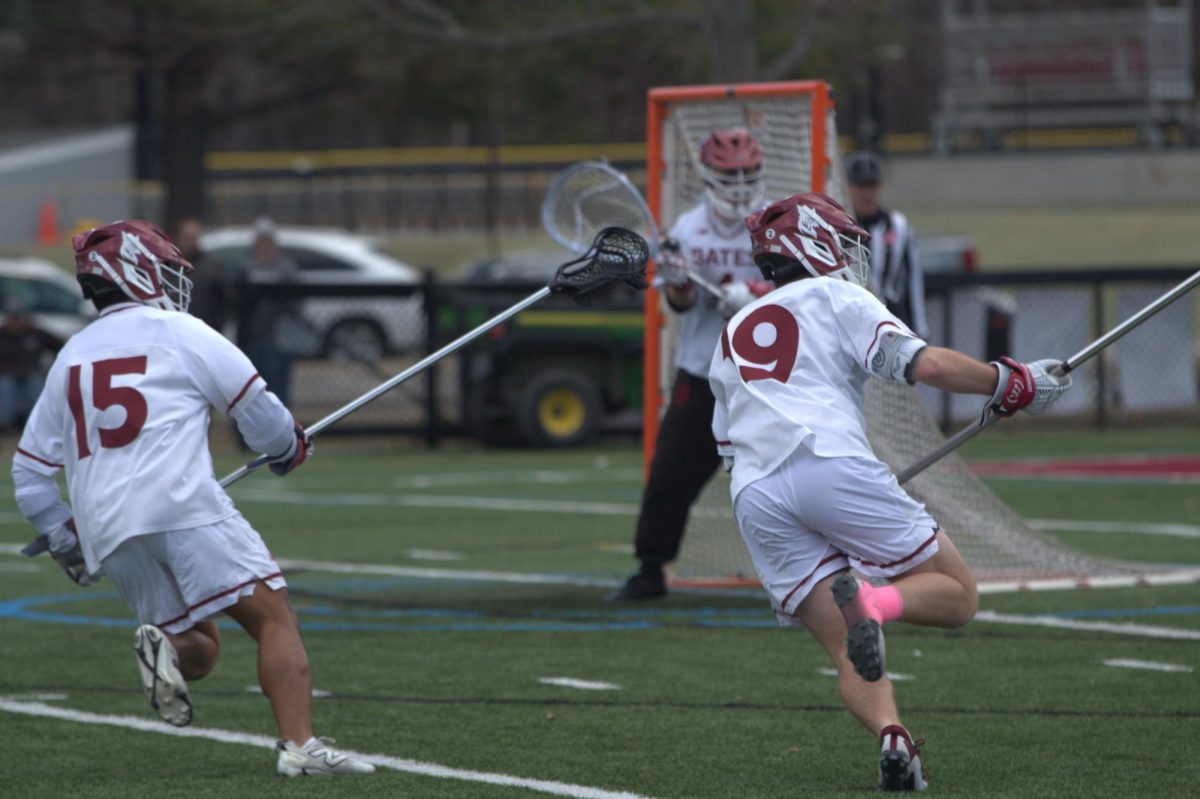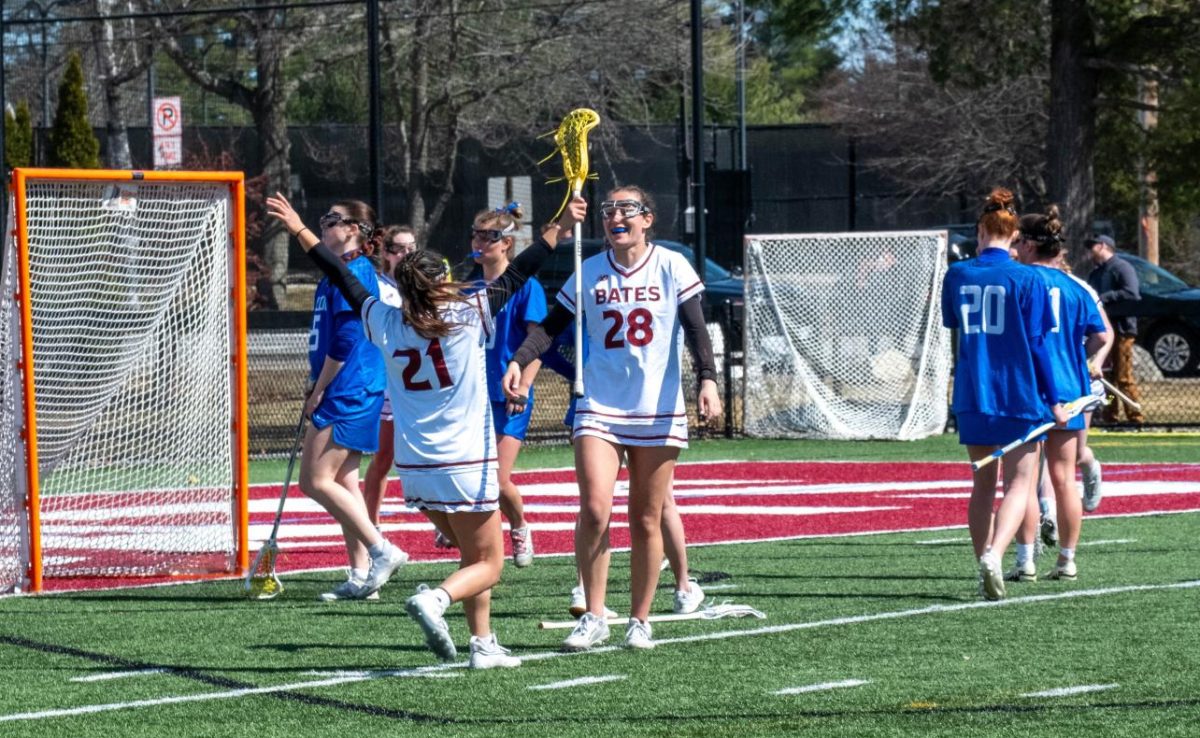

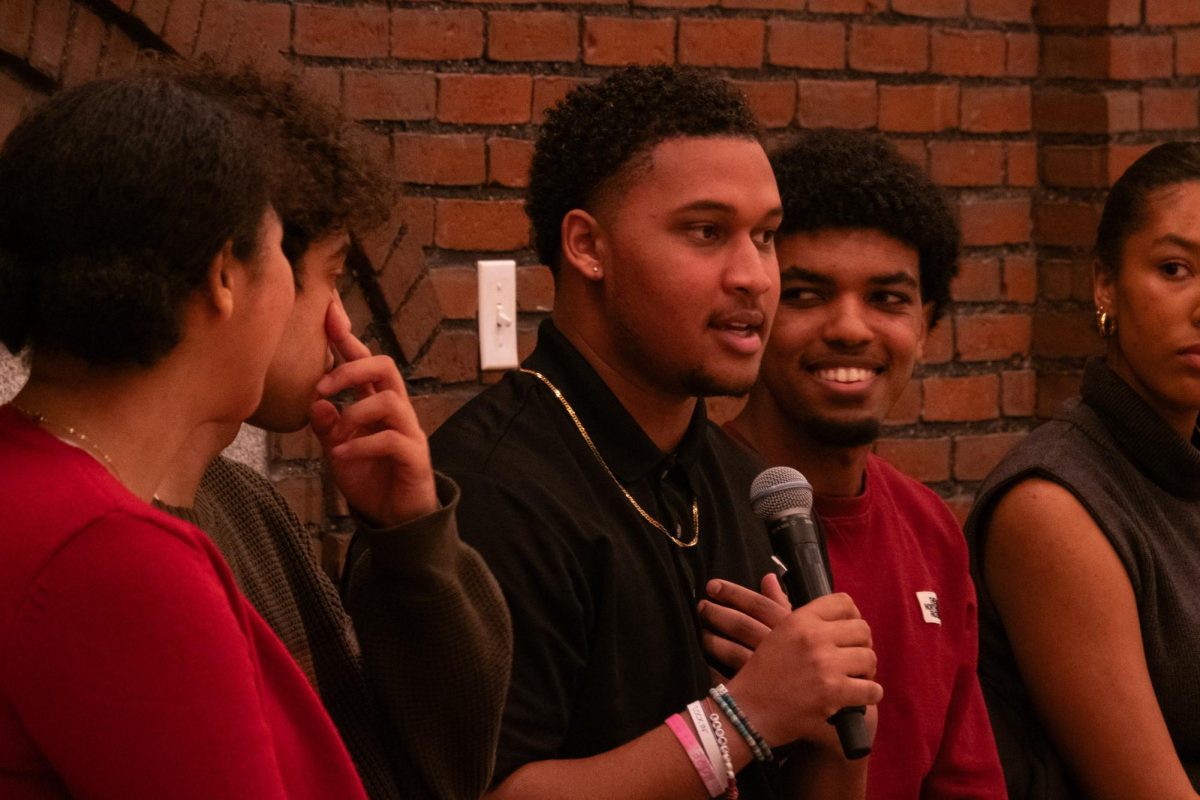
On the evening of Feb. 12, Bates Athletes of Color Coalition (BACC) hosted a panel that highlighted the experiences of Black members of the college’s various athletic programs.
Students and coaches represented women’s lacrosse, men’s cross country and track and field, football, volleyball and women’s tennis on the panel.
The panel celebrated Black History month while also highlighting the recent momentum and accomplishments of BACC. Students and faculty packed Chase Hall to listen to the experiences of their peers, teammates and coaches.
The panel took a question-answer format using pre-submitted questions. The first question prompted panelists to describe an instance of feeling isolated as an athlete of color at Bates.
Reuven Frye ‘26, a track and field athlete, answered first, saying that he has experienced isolation “more in the classroom” than within athletics. As a STEM student, Frye spoke about finding limited representation in the classroom.
“I’m lucky that my team is very diverse and we have one of the two Black coaches on campus,” Frye continued.
Bella Saul ‘26 a member of the women’s tennis team and Amanda Edge ‘26 a lacrosse athlete, both spoke about the power of a diverse team and coaching staff. Saul spoke about her experience having a Black captain her freshman year while Edge described the positive impact of having representation on her team’s coaching staff with Coach Princess Zabel known to players as “Coach P.” Both talked about how this made their experiences less isolating.
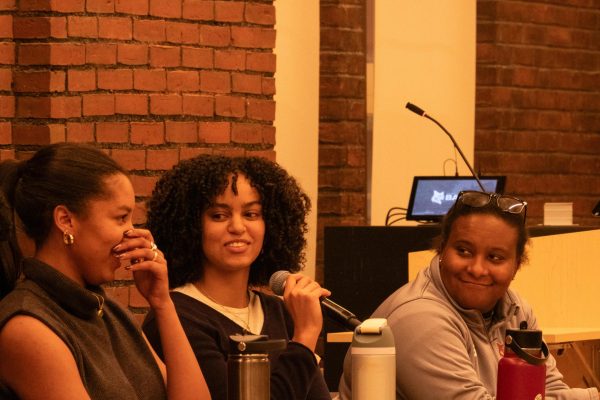
Panelists then had the opportunity to speak about experiences of microaggressions. “Microaggressions have been a big part of my Bates experience,” said Edge, who for her first two years at Bates, was the only Black member of the women’s lacrosse team. “It was a lot of things that my teammates didn’t know, comments about hair, about music, comments about the way I carried myself.”
Nora Gilmer ‘28 seconded Edge’s comments. Unlike Edge, however, Gilmer had experienced a diverse women’s volleyball team. Nonetheless, she spoke about the difficulties in addressing microaggressions in the moment explaining the pressure to “laugh things off.”
“It’s really hard in moments like that to stop and acknowledge the space and hold time to hold people accountable,” Gilmer said. “It’s something I’m working hard on as a student of color at Bates.”
Carmel Crunk ‘28 of Bates football described microaggressions that he has experienced as meant to be humorous. Like Gilmer, he expressed a resistance to laughing it off. “I try not to take it as a joke,” he said.
Instead, panelists discussed how they have learned to hold teammates accountable and address microaggressions as they occur. “Constructive solutions is the best way to get your point across,” said Frye, adding that matching aggression or tone “hasn’t exactly been the solution” in his experience.
Gilmer added that she tries to see the human in the offender. She sees microaggressions as coming from a place of ignorance. “It’s difficult to understand that they’re just a person too.” Although it’s hard, Gilmer says that by recognizing an offender’s mistake “allows for you to interact with them as a person.” Nguisse emphasized the power of turning these moments into teaching opportunities.
Track and Field Coach Curtis Johnson (who could not attend but submitted answers) and Coach Zabel spoke about facing microaggressions throughout their time as athletes and coaches. Zabel spoke about the responsibility of being a role model for her players when handling instances of racism. She also remarked on a generational difference, noting more support systems for athletes of color than before.
Edge echoed these sentiments, describing a team “culture shift” saying that peers have learned from her experiences and those of other teammates of color and have “grown a lot.”
Panelists commented on the increased support they have felt from representation in coaching staff and teammates putting in more effort towards fostering an inclusive environment. Saul added that before this year, BAAC was “non-existent.” She discussed how the group has focused on inclusivity and making accessibility a priority.
The group now has open lunches weekly in Commons Dining Hall which has increased numbers and a sense of community among Bates athletes of color. “I’m really proud of the community we’ve created,” Saul said.
Panelists highlighted that this attention to inclusivity and diversity within and beyond athletics is particularly important in a predominantly white institution like Bates. When asked about whether identity as a Black athlete impacted his recruiting process, panelist Fraol Nigusse ‘26 of Bates Cross Country Track and Field described finding it “odd” to be in a predominantly white classroom after participating in diverse athletic environments growing up.
Edge also spoke to the “culture shock,” saying that although she was used to often being the only Black girl on her teams. “But it wasn’t my entire social existence,” she elaborated. “Bates was my first time not having that different social outlet with people of color, necessarily.”
“In terms of community as a coach, I try to recruit an eclectic group of people,” said Zabel, weighing in as a coach to the recruiting question. “I want my teams to reflect the world,” she continued, speaking on the importance of a diverse locker room that fosters growth and mutual understanding. “I really want people coming in to have a good experience and have a safe space.”
The efforts of coaches, athletes and BAAC have not gone unnoticed. Frye remarked on his experience of increased diversity at Bates. “There used to be one main table with students of color,” he said. Entering Commons now, he notes that students of color are more interspersed.
When asked about her experience being a panelist, Saul was overwhelmingly positive. “I think it went really well. I am really excited that BAAC is a fully fledged club now and accessibility increased when Adrienne asked me, Reuven and Amanda to be on the advisory board,” she said.
“I feel like the panel gave us a great opportunity to promote BAAC and talk about our experiences as black athletes at Bates.” The women’s tennis senior also noted the value in having so many different voices with varying experiences.
Women’s lacrosse player Raegan White ‘26 shared her experience supporting her teammate and Coach: “It was very eye-opening and emotional. I was hearing my own teammates tell their stories and to hear that these are happening in the locker room. It’s important to hear our teammates and how they can be vulnerable and how even our coach can still experience these things.”